

Entrepreneur Revolution
Does it feel like the old rules for success no longer apply? The well-trodden path of working hard, climbing the corporate ladder, and saving for a distant retirement seems increasingly fragile in a world where old economic models are breaking down. A new system is emerging, and with it, a new set of principles for achieving success and fulfillment.
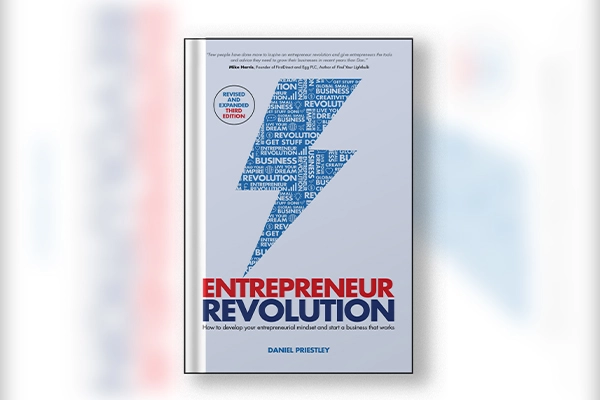
Author and entrepreneur Daniel Priestley calls this shift the “Entrepreneur Revolution.” It’s a fundamental change in how we think about work, value, and wealth. This article distills five of the most surprising and impactful truths from his book that challenge the conventional wisdom we were all taught. These are not just five interesting tips; they are the interconnected pillars of a single, crucial mindset shift required to survive and thrive in this new era. Prepare to dismantle the assumptions that are holding you back.
1. The Shocking Truth About Greed in the Entrepreneur Revolution
One of the most ingrained beliefs from the industrial age is that wanting too much money is greedy. The Entrepreneur Revolution turns this idea on its head, arguing that having small financial goals is the truly selfish position.
Priestley illustrates this with a thought experiment called “Who is Being Selfish?” Imagine you could magically receive any income you wanted for the next year, as long as the amount wasn’t “greedy or selfish.” Most people choose a modest number, perhaps a few hundred thousand dollars or even 10 million. Priestley argues this is the greedy mindset. A goal of “10 million” is inherently selfish because it only considers your own needs and maybe those of your immediate family. It’s an amount that allows for a nice house and holidays, but it’s not enough to solve massive global problems.
In contrast, the “rich mindset” is indifferent to money as a personal object. It focuses on a vision so large—ending hunger, saving rainforests, transforming an industry—that the financial requirement becomes secondary. This mindset shift is crucial because it aligns with a deeper truth about wealth. The “poor mindset” sees money as scarce and something that requires hard work to obtain. The “elite mindset,” however, understands money is simply a measure of value transfer—an invented concept that flows toward those who create value. Success in the Entrepreneur Revolution is measured not by what you accumulate, but by the scale of the problems you solve.
“It’s not selfish to have a lot of spare time or a lot of spare cash. It’s selfish to indulge all of your time doing something that neither serves or inspires anyone and then make a boring amount of money that only barely compensates you for your time.”
2. Your Brain’s Ancient Wiring Is a Trap—Here’s Why
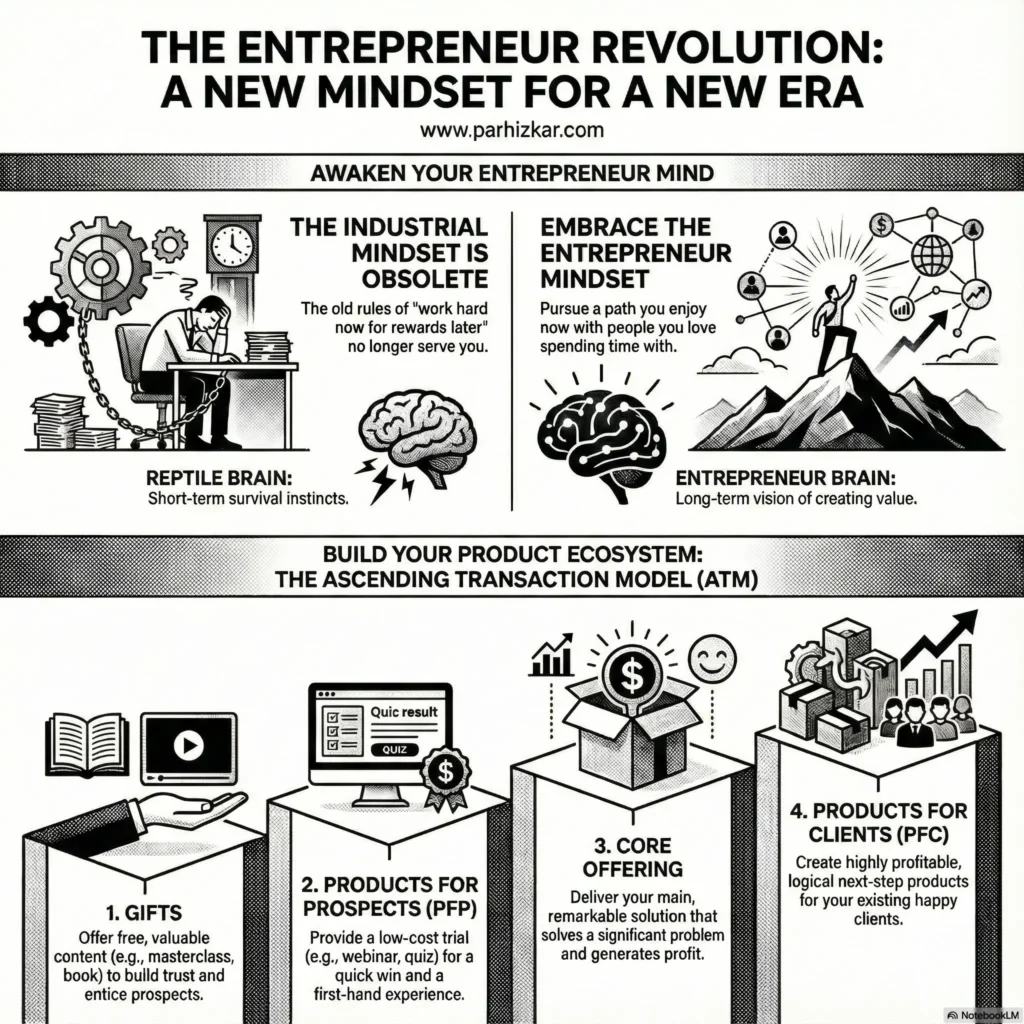
This reluctance to aim for massive, world-changing goals is not just a philosophical error; it’s a symptom of our most primitive brain wiring, which actively works to keep our ambitions small and safe. To thrive in this new era, you first have to understand the outdated programming running in your own mind. Priestley presents a simplified model of the brain with three parts: the Reptile, the Autopilot, and the Entrepreneur. It’s the first one that consistently sabotages our potential.
Understanding the Reptile Brain in the Entrepreneur Revolution
The “Reptile” brain is the primitive, survival-focused part of our consciousness. It is emotional, shortsighted, and has no capacity for long-term thinking or empathy. Its only goal is immediate safety and gratification with the least possible effort. In modern times, this part of the brain is easily fooled by get-rich-quick schemes, junk food, and other vices. To make itself feel safe from the perceived dangers of the world, it constructs juvenile financial fantasies.
The Fantasies Your Reptile Brain Loves
These common goals are not signs of ambition but rather traps laid by your primitive brain. Recognizing them for what they are is a critical step toward an entrepreneurial mindset.
- Passive income: The reptilian fantasy that money will arrive permanently without any energy, focus, or effort.
- Retirement: The desire to stop contributing value, born from the fear that you are too old “to hunt or gather.”
- Multiple streams of income: A primitive fantasy of safeguarding your “food supply” by having money come from many disconnected sources.
- Big wins: The hope of getting all the money you need for life in one single hit, avoiding consistent effort.
- Entitlements: The belief that there’s money that ‘should rightfully be yours’.
- Providers: The desire for a person or organisation to take care of you so you won’t need to worry about money.
- Financial freedom: The dream of a time when you will no longer need to be responsible for the complexity that comes with wealth.
These are traps because they focus on escaping responsibility and contribution. While the Reptile Brain seeks to escape complexity, the Entrepreneur Brain actively seeks to manage it, viewing the financial complexity that accompanies wealth as a sign of a valuable, growing empire.
3. The Myth of Confidence: Why Output Is Your Only True Currency
This internal battle against our primitive brain often manifests as a different kind of trap: waiting for confidence. We tell ourselves, “I’ll start that project when I feel ready,” or “I’ll publish my work when I’m more confident.” According to Priestley, this is a profound mistake that paralyzes potential.
The guiding maxim of the Entrepreneur Revolution is: “Influence Comes from Output … Not Confidence.” Many of the most influential people in modern history were plagued by insecurity and self-doubt. Figures like Whitney Houston, Kurt Cobain, and Amy Winehouse commanded global influence despite their personal struggles. Their power didn’t come from an unshakeable inner belief, but from the sheer volume and quality of what they produced.
Conversely, think of the prolific output of The Beatles, who created the world’s most valuable music catalog in just eight years, or Stephen Spielberg, who has directed over 50 films and produced nearly 200. Their influence is a direct result of their relentless creation. This concept is incredibly liberating. It reframes action as the cause of influence, not the result of a feeling. It doesn’t matter if you have self-doubt; what matters is that you produce. In the Entrepreneur Revolution, your currency is what you create, shifting your focus from being a consumer to a producer.
“Influence is not about confidence, influence is about output. You can lack confidence, you can be racked by self‐doubt and you can secretly fear an imminent alien invasion but if you create amazing output you will gather influence.”
4. Why ‘Fun’ Is the New Foundation of the Entrepreneur Revolution
Just as the Entrepreneur Revolution separates influence from confidence, it also demolishes another outdated Industrial Age belief: “Work Isn’t Meant to be Fun.” Priestley uses the example of his grandfather, a factory technician who made copper cable. For him, work was hard, hot, and dangerous. Fun was something separate, reserved for weekends of golf and fishing.
This paradigm is now obsolete. In the Entrepreneur Revolution, your fun and passion are the business. If Priestley’s grandfather were alive today, his love for golf and fishing could be the foundation of a global small business. He could create a community, sell products, and share his passion with a worldwide audience.
“Working hard” in the traditional sense is now a strategic red flag. Hard, repetitive, and functional labor is precisely what is being automated by AI or outsourced to lower-cost regions. The real, defensible value now lies in the uniquely human qualities of creativity, energy, passion, and solving meaningful problems in a way that feels like play. If your work feels like a monotonous grind, it’s a sign that your value is diminishing, not increasing.
5. Beyond AI: Why Your Humanity Is Your Greatest Asset
The shift away from functional, joyless work toward passion-driven enterprise isn’t just a lifestyle choice—it’s the next logical step in our economic evolution. As technology automates more complex tasks, Priestley maps our history into three distinct eras to show a clear path forward.
- The Age of ‘Hands’: For millennia, value was tied to physical skill and dexterity with tools like ploughs and looms. This era ended when industrial machines could perform manual labor better, faster, and cheaper than any human.
- The Age of ‘Heads’: The Industrial Revolution gave way to an era where thinking, knowledge, and strategy were paramount. Thinkers like lawyers and accountants, and strategists like Rockefeller and Carnegie thrived. This age is now being challenged by computers and AI, which can process information and execute complex logic more efficiently than the human brain.
- The Age of ‘Hearts’: We are now entering a new era where the most valuable human contributions are those that machines cannot replicate: passion, human connection, empathy, love, and intimacy.
The strategic implication of this shift is profound. As AI handles the functionality of the “Age of Heads,” it frees humans to provide the vitality—the irreplaceable life-force—of the “Age of Hearts.” This vitality is what builds businesses people love. The qualities that make us most human become our ultimate competitive advantage. Success in the Entrepreneur Revolution isn’t just about a smart business model; it’s about building a business that people—employees, customers, and partners—love being a part of. The future belongs to those who lead with their hearts.
“The companies that will do well in the future are the ones that discuss love in the boardroom.”
Conclusion: It’s Time to Choose Your Revolution
Thriving in the Entrepreneur Revolution is less about mastering a specific business tactic and more about making a profound mindset shift. It requires unlearning the outdated rules of the Industrial Age—that work is a joyless sacrifice, that confidence precedes action, and that small ambitions are humble. The new rules reward passion, prolific creation, and a focus on human connection.
The Entrepreneur Revolution is here. Which of these old rules is still holding you back, and what’s one action you can take today to start living by the new ones?
Daniel Priestley is a highly successful entrepreneur, international speaker, and best-selling author who started his first multimillion-dollar business before the age of 25. He is the founder of Dent Global, a leading business accelerator that helps entrepreneurs grow and stand out. He has also co-founded successful software companies, including ScoreApp and the AI startups BookMagic and AwardsApp. Drawing on his experience building and selling multiple businesses across different countries, Priestley has authored seven books on entrepreneurship, such as Oversubscribed and 24 Assets, and continues to help business leaders worldwide scale their companies.
Book details
- Title: Entrepreneur Revolution
- Explanatory Title: : How to Develop your Entrepreneurial Mindset and Start a Business that Works
- Author: Daniel Priestley
- Publisher: Capstone
- Publication Date: April 22, 2024
- Print Length: 272 pages
- ISBN-10: 0857089730
- ISBN-13: 978-0857089731
- Category: Starting a Business / Finance / Entrepreneurship